
Flanged Rubber Expansion Joint: Stop Vibration & Leaks?
What Engineers Really Ask About Rubber Expansion Joints (and What Matters in the Field)
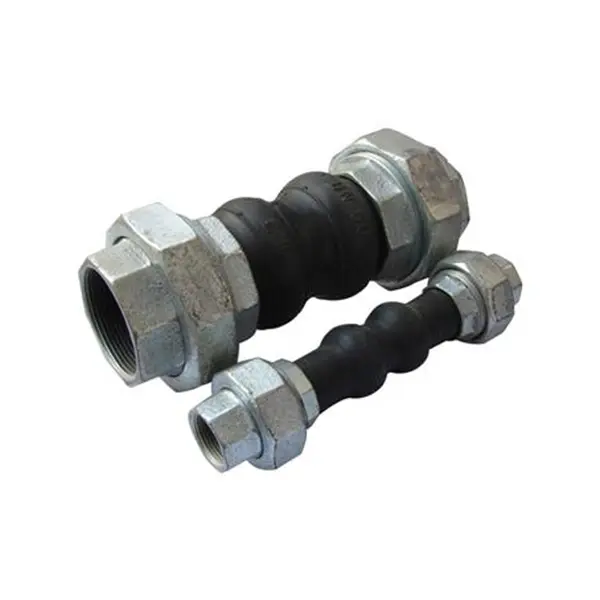
On the plant floor, noise and vibration aren’t just annoyances—they’re symptoms. Over the past decade I’ve watched maintenance teams gravitate toward one component that quietly fixes a lot of problems: the flanged rubber expansion joint. To be honest, the name undersells it. Properly specified, it will babysit your pumps, forgive misalignment, and outlive half the instrumentation hanging around it.
Industry snapshot and trends
Markets are asking for larger sizes (DN1200 and up) and smarter restraint systems. Chemical plants want FKM and NBR; water utilities keep shouting for EPDM that’s WRAS-compliant; data centers care about vibration isolation in closed-loop HVAC. Interestingly, more projects now specify control units as standard on larger sizes—good call.
This product line comes out of the Malleable Iron Zone, Shijiazhuang, Hebei, China—an old-school cluster where you still see compound mixing and cord cutting done with that focused, craftsman vibe. Supply range can reach DN4000, which, surprisingly, is less exotic than it sounds these days.
How it’s built (process flow, short version)
- Compounds: NR, EPDM, Neoprene, IIR, NBR, FKM (ISO 1629 coding). ASTM D2000 call-outs on request.
- Reinforcement: multi-ply nylon/polyester tire cord; steel wire rings; optional PTFE liner for aggressive media.
- Forming: mandrel wrapping, cord angle control, bead inserts aligned for flange seating.
- Vulcanization: controlled cure; heat aging checks per ISO 188.
- Hardware: flanges to GB/T 9115.1-2000 as default; ANSI/ASME, DIN/EN/BS, JIS also available.
- Testing: hydrostatic, vacuum, burst sampling; rubber properties per ASTM D412 (tensile), D2240 (Shore A).
Typical specification snapshot
| Parameter | Spec (≈ / typical) | Notes |
|---|---|---|
| Size range | DN25–DN4000 | Large DN should include limiters/control units. |
| Pressure class | PN10 / PN16 / PN25 (around) | Check vacuum rating separately. |
| Temperature | EPDM: −20 to +120°C; FKM: up to ≈200°C | Real-world use may vary with media and duty cycle. |
| Movement capability | Axial ±10–25 mm; Lateral ±10–20 mm; Angular up to ≈15° | Depends on DN and ply count. |
| Flange standard | GB/T 9115.1-2000 (RF) default; ANSI/DIN/EN/JIS optional | Match to valve flanges for best seating. |
Where it shines (and what to watch)
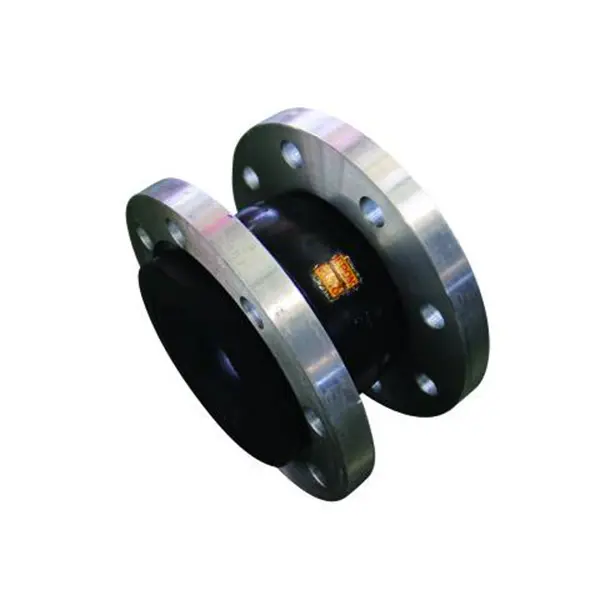
Applications: pump suction/discharge in water and wastewater, HVAC risers, cooling towers, desalination plants, power-generation balance-of-plant, refinery utilities, shipboard systems (ASTM F1123 territory). Advantages: vibration and noise reduction, misalignment forgiveness, corrosion resistance vs. metal bellows. Caveat: above DN200 in overhead water supply, fix the piping with supports/brackets—or install control units. Many customers say that one change alone eliminated gasket creep and bolt loosening.
Customization menu
Materials: NR/EPDM/NBR/Neoprene/IIR/FKM; liners; double-arch for higher movement; tied, limited, or spherical designs; drilled flanges to GB/JB/HG/CB/ANSI/DIN/BSEN/NF/EN/JIS/ISO. OEM to drawings is normal. I guess the real trick is matching media chemistry, temperature, and expected movement—get those right and service life stretches to 5–10 years (often more in clean water).
Vendor comparison (field-notes version)
| Vendor type | Lead time (≈) | Customization depth | Testing & docs | Risk notes |
|---|---|---|---|---|
| Specialist manufacturer (Hebei) | 2–4 weeks | High (materials, flanges, control units) | Hydro/vacuum data, ISO 9001, material reports | Confirm lining and bolt pattern early |
| Typical import brand | 4–8 weeks | Medium–High | Comprehensive, but pricier | Budget and availability |
| Low-cost trading house | 1–3 weeks (varies) | Low–Medium | Basic; request third-party tests | Watch for undercured rubber, thin plies |
Two quick case notes
Power plant pump room: swapping rigid connectors for flanged rubber expansion joint units with control rods cut vibration by ≈40% at the casing (FFT logs), and the mechanical seal leaks basically stopped. Not glamorous—just effective.
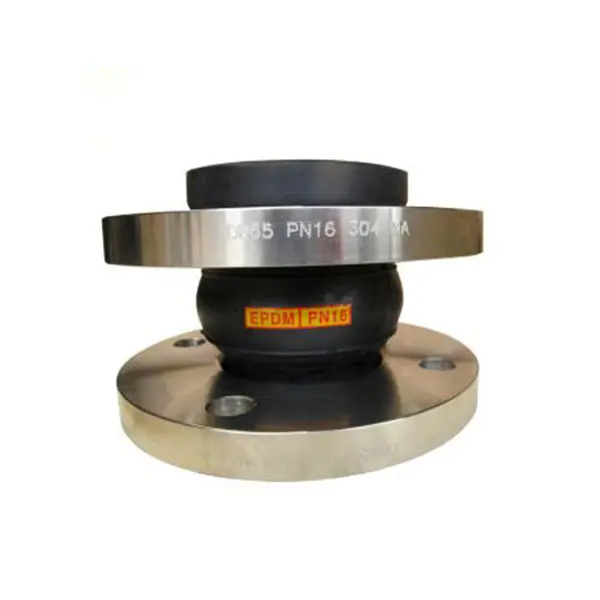
High-rise HVAC: EPDM flanged rubber expansion joint on cooling tower risers; once fixed supports were added above DN200 and rods set to cold length, the “water hammer thump” vanished. Maintenance team’s words, not mine.
Practical checklist before specifying
- Media, temp, pressure, and vacuum (if any).
- Movement: axial, lateral, angular—measured, not guessed.
- Flange standard and face: match valve flanges or GB/T 9115.1 RF.
- Supports/brackets for overhead lines; add control units above DN200.
- Documentation: hydro test, rubber data sheet, traceability; WRAS/CE/ISO 9001 if required.
Specs and performance are approximate; real-world service life depends on media, cycling, installation quality, and temperature.
References
- Fluid Sealing Association (FSA) & ARPM. Non-Metallic Expansion Joints and Expansion Joint Filler Materials Handbook.
- ASTM F1123 – Standard Specification for Nonmetallic Expansion Joints for Shipboard Piping Systems.
- ASTM D2000 – Standard Classification System for Rubber Products in Automotive Applications.
- GB/T 9115.1-2000 – Steel Pipe Flanges; EN 1092-1 – Flanges and their joints (for reference to drilling/face dimensions).