You know, after running around construction sites all year, smelling cement and dealing with engineers, I've seen a lot. Lately, everyone's talking about prefabrication, modular stuff, you name it. It’s all about speed, right? Getting things done faster, cheaper. But to be honest, it’s not always as simple as it sounds. There’s always a catch.
I’ve seen so many designs that look great on paper, but fall apart the minute you try to actually build them. Like, they spec a fancy flange, thinking it’s all high-tech and efficient, then forget to account for the fact that the guys on site don’t have the right tools to install it. Or they use a material that's theoretically perfect, but is a nightmare to weld. It's infuriating.
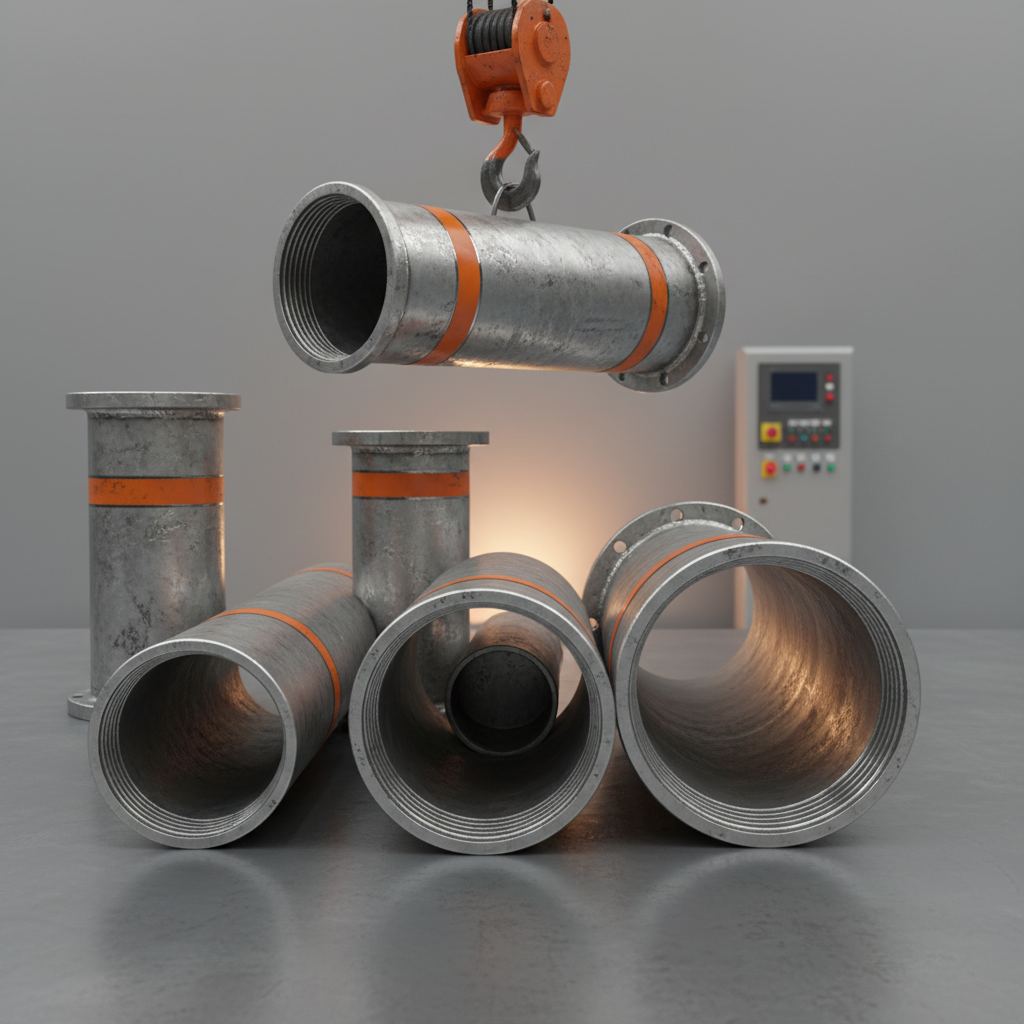
And the materials themselves… people think it’s just steel and plastic. But it’s not! It’s about the grade of steel, the type of plastic. Have you noticed how some PVC smells… off? Like it's going to crumble in your hands? That's a bad sign. We mostly use Schedule 80 steel pipe these days – feels solid, you know? A good weight to it. We also use a lot of CPVC for hot water lines; it handles the heat much better, but it’s more brittle. You gotta be careful with it.
The Current Landscape of pipes and fittings manufacturers
Anyway, I think the biggest trend right now is the push for more sustainable materials. Everyone's looking for alternatives to traditional PVC – polypropylene, PE-RT, even some bio-plastics. It's good, in theory, but they often come with their own set of problems. Price, availability, and frankly, a lot of guys on site are just used to working with what they know. Getting them to change takes time and training.
The competition amongst pipes and fittings manufacturers is fierce, too. It's not just about price anymore. It’s about delivery times, customization options, and who can actually solve problems on the fly. I encountered this at a factory in Ningbo last time – they promised the world, but couldn't deliver on a simple change request for a threaded fitting. It was a disaster.
Common Design Pitfalls in pipes and fittings manufacturers
Strangely, a lot of engineers forget about the realities of on-site installation. They design these incredibly complex systems, with tight tolerances and weird angles, then expect the plumbers to magically make it work. It doesn't. It never does. I’ve lost count of the number of times I’ve had to tell someone, “Look, you can’t put a 45-degree elbow in that space, it’s physically impossible.”
Another big issue is underestimating the need for access panels. They design these beautiful, seamless walls, then forget that you actually need to get inside to fix a leak or replace a valve. Then you’re tearing down drywall, and everyone’s mad.
And don’t even get me started on the use of dissimilar metals. Galvanic corrosion is a real thing, people! You can’t just throw a brass fitting into a steel pipe and expect it to last.
Material Deep Dive: Beyond Steel and Plastic
To be honest, the new composite materials are interesting. They're lightweight, strong, and corrosion-resistant. But they’re expensive. Really expensive. And the guys on site aren’t used to working with them. They don’t know how to cut them, how to join them, how to repair them. We did a trial run with a carbon fiber reinforced polymer pipe last year. It looked great, but the labor costs were through the roof.
We’re also seeing a lot more use of PEX tubing, especially in residential plumbing. It's flexible, easy to install, and relatively inexpensive. But it’s also susceptible to UV damage, so you have to protect it from sunlight. And you need the right crimping tools – otherwise, you’re just asking for trouble. The smell when you burn PEX…whew. You only make that mistake once.
Stainless steel, of course, is the gold standard for corrosion resistance. But it’s heavy, expensive, and can be a pain to weld. You need a skilled welder, and you need to make sure you’re using the right filler material. Otherwise, you'll end up with a weak joint that's just waiting to fail.
Real-World Testing and Validation of pipes and fittings manufacturers
Forget the lab tests. Those are fine for getting certifications, but they don't tell you how a product will actually perform in the real world. I’ve seen things pass all the lab tests and still fail miserably on site. We do our own testing, basically stress-testing the heck out of everything.
We pressure test everything, of course. But we also subject the fittings to vibration, temperature extremes, and even intentional abuse. We drop them, we bang them with hammers, we try to break them. If it can’t survive that, it’s not going on a job site.
pipes and fittings manufacturers Performance Metrics
User Behavior and Unexpected Applications of pipes and fittings manufacturers
You wouldn’t believe how people misuse these things. We designed a specific fitting for a high-pressure gas line, and someone used it to build a makeshift sprinkler system for their garden. Seriously.
And they always try to adapt things. They'll try to connect a metric fitting to an imperial pipe with duct tape and wishful thinking. It never works, but they keep trying. They're resourceful, I'll give them that.
Advantages, Disadvantages, and Customization Options for pipes and fittings manufacturers
The biggest advantage of working with good quality pipes and fittings manufacturers is peace of mind. You know it’s going to hold, you know it’s going to last. But the downside is the cost. You pay for quality, there’s no getting around that.
And customization…that’s where it gets tricky. We can do almost anything, but it costs money. Last month, that small boss in Shenzhen who makes smart home devices insisted on changing the interface to on all his plumbing connections, and the result was a complete disaster. He thought it would be “future-proof”. It wasn’t. It was just a waste of time and money. He kept saying, "It's for the aesthetics!". Aesthetics! On a drain pipe!
A Customer Story and Lessons Learned Regarding pipes and fittings manufacturers
We had a client building a data center, super high-stakes stuff, cooling systems are critical. They wanted a specific type of stainless steel fitting, but they needed it with a non-standard thread size. We told them it would be expensive and take time. They insisted.
We delivered, of course. That’s what we do. But the whole process was a headache. It highlighted the importance of clear communication and upfront planning. Because changing things mid-stream, especially with custom parts, is a recipe for disaster.
Ultimately, they were happy with the result. The cooling system worked perfectly. But it could have been a lot smoother.
Core Insights from Field Observations
| Material Type |
Installation Difficulty (1-5) |
Cost Factor (Low/Med/High) |
Long-Term Durability (1-5) |
| PVC |
1 |
Low |
2 |
| CPVC |
2 |
Med |
3 |
| Steel (Galvanized) |
3 |
Med |
4 |
| Stainless Steel |
4 |
High |
5 |
| PEX |
2 |
Low |
3 |
| Composite Materials |
5 |
High |
4 |
FAQS
Honestly, it's not thinking about the whole system. They focus on the pipe itself, not how it interacts with the fittings, the valves, the other components. You gotta consider corrosion, temperature, pressure – everything. A cheap pipe might save you money upfront, but it can cost you a fortune in repairs down the road.
They’re important, sure. They show that the product has been tested and meets certain standards. But they're not a guarantee of quality. I've seen certified products that were still junk. It’s more about who made the product and what their reputation is.
Keep them out of the weather, for starters. Protect them from direct sunlight, rain, and snow. And don’t just pile them up in a heap. That can damage the fittings and make them difficult to inspect. Use pallets, keep them organized, and check for any signs of corrosion or damage regularly.
Oh boy, that’s a whole can of worms. NPT, BSPT, metric… it’s a mess. You gotta make sure you’re using the right thread sealant and the right wrench. Otherwise, you’ll end up with leaks. And nobody wants that.
Yeah, a lot of companies are working on new welding techniques, especially for plastic pipes. There’s also a lot of interest in mechanical fittings that don’t require any welding or threading. But those are still pretty expensive and not widely adopted yet.
It depends on the weight of the pipe, the temperature, and the environment. You need to make sure the supports are strong enough to hold the pipe securely, and that they’re corrosion-resistant. Don't skimp on supports. A collapsed pipe is a nightmare.
Conclusion
So, yeah, pipes and fittings manufacturers. It’s not glamorous work, but it's essential. There's a lot more to it than just picking a pipe off the shelf. It’s about understanding the materials, the applications, and the realities of on-site installation. It’s about thinking ahead and avoiding potential problems.
Ultimately, whether this thing works or not, the worker will know the moment he tightens the screw. That’s the truth of it. And if he has to tighten it twice, you know you messed up somewhere.